Your employees are already using AI, this gives you the exact guardrails to control it without slowing them down.
Most companies think they have AI under control until they actually look. The reality is that "Shadow AI", employees using unvetted tools to save time, is creating unseen vulnerabilities in your data privacy and intellectual property.
To help you manage this, we’ve put together a complete AI Policy Kit that you can roll out this week.
AI Policy Kit + PowerPoint Preview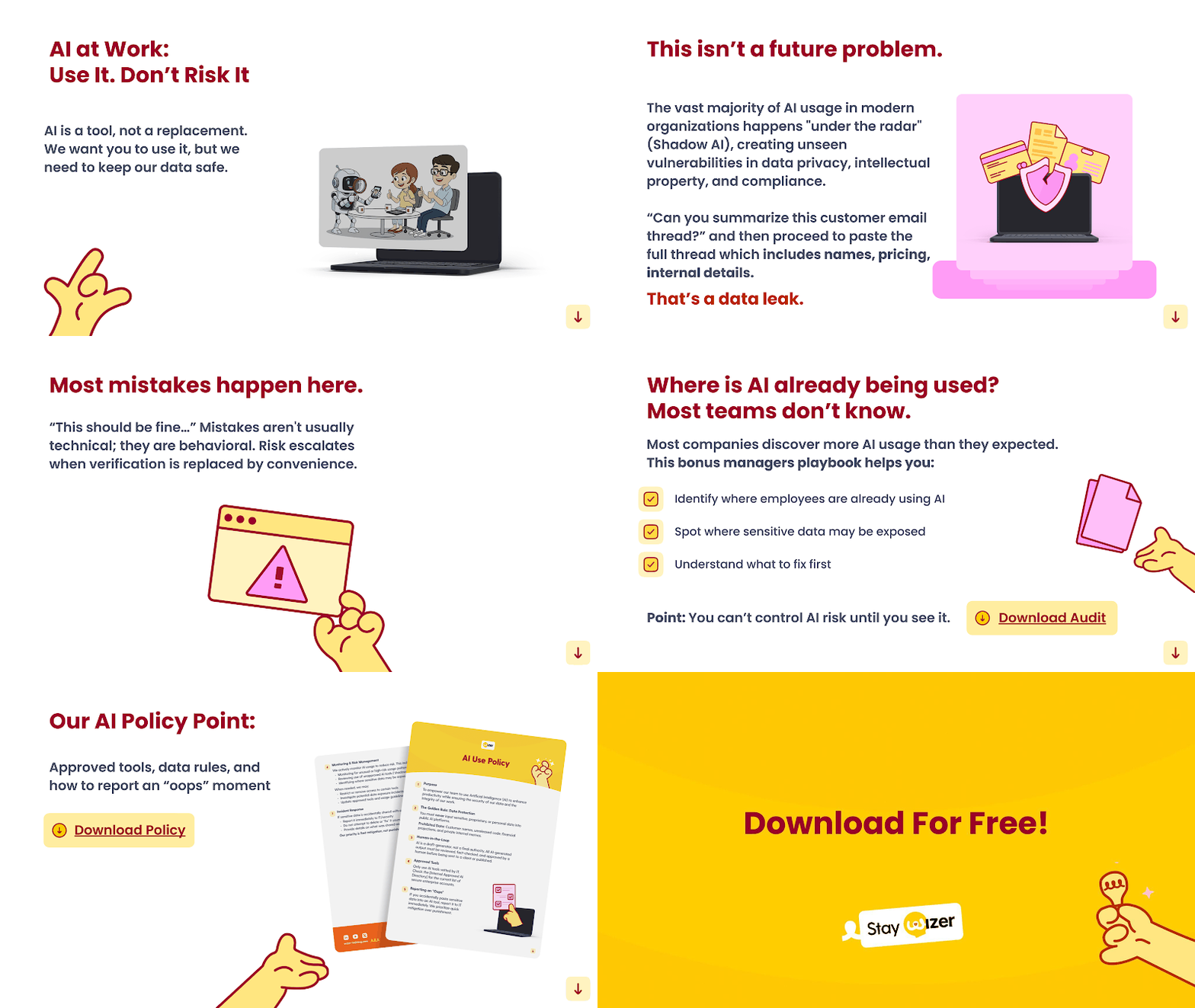
Download the AI Policy Kit, Roll It Out This Week.
The Risks Of Not Having an AI Usage Policy
What is an AI policy? An AI policy is a set of guidelines that dictates how employees can safely use generative AI tools like ChatGPT while protecting company IP and data privacy.
- Data Leakage via Public LLMs: Employees accidentally training public models on sensitive company IP or customer data.”
- Compliance Violations: Unauthorized AI use (Shadow AI) creates gaps in GDPR, SOC2, or HIPAA reporting.
- Lack of Audit Trails: No central visibility into which AI tools are being used, by whom, or for what purpose.
This kit gives you the exact guardrails to stop it.
What you’ll actually be able to do after this:
- Stop employees from pasting sensitive data into AI (immediately)
- Give your team clear “what’s allowed vs not” in 15 minutes
- Identify where AI is already being used (without slowing teams down)
- Roll out an AI policy without legal or IT delays
Bonus: Find AI Risk in Your Organization in 30 Minutes (Our Manager Playbook)
Most teams don’t know where AI is already being used. This playbook shows you exactly how to identify:
- Where employees are using AI today
- Where sensitive data is being exposed
- What to fix first
This is part of the AI Policy Kit PowerPoint Download below.
Who Needs an AI Corporate Governance Framework?
- IT & Security leaders who need guardrails fast
- HR / Ops teams rolling out AI policies
- MSPs managing multiple client environments
- Compliance Officers needing an AI Corporate Governance Framework to meet 2026 regulatory standards.
Download the AI Policy Kit, Roll It Out This Week.
Where AI Policies Fail (and create more risk)
- banning AI = drives shadow usage
- unclear rules = employees guess
- no training = policy gets ignored
Employees are already using AI, without guardrails. Thats the risk. This kit gives you the guardrails to control AI use, without slowing your team down. We provide the guardrails so your team can innovate without accidentally leaking your company's "secret sauce."
Most companies think they have AI under control. Until they see a test. Run a simulation or training
What's Inside the Kit?
Everything you need to roll this out in a single week:
- 2-page AI policy (ready to use, no legal rewrite, our AI Policy Kit is designed to bridge the gap between IT security and legal requirements, saving you weeks of back-and-forth with counsel.)
- 15-minute training deck you can present immediately
- Printable “Safe AI Rules” guide for your team
- Short AI risk explainer video (data leakage + hallucinations)
- Bonus: a FREE AI Employee Risk Assessment:
- Use Free Assessment Tool (Send one link to employees. View anonymous results in a live dashboard. No setup required.)
- Download Assessment PDF (Copy and paste the questions from the downloadable PDF within the PPT into Google Forms or Microsoft Forms.)
- Use Free Assessment Tool (Send one link to employees. View anonymous results in a live dashboard. No setup required.)
Time to implement:
- 30 min to review
- 15 min to present
- Same-day rollout
Lastly, make sure to check out our YouTube Channel for more ways to stay safe while using AI, such as this video, which exposes the ways an AI Notetaker could be the culprit of your next breach:
P.S, Looking for more ways to keep your team engaged? Check out our Monthly Videos & Real Life Stories to see how security plays out in the real world. You can also dive straight into our latest breakdown on AI safety and corporate risk to see these principles in action.
AI Policy: FAQ

Rather than banning tools, organizations should provide an AI Policy Kit that defines "Sanctioned vs. Unsanctioned" tools and provides safe alternatives for employees.
The primary risk is data sovereignty—losing control over where your company data is stored and how it is used to train third-party AI models.
Organizations can detect Shadow AI by monitoring network traffic for known AI domains, auditing browser extensions via MDM (Mobile Device Management), and conducting anonymous internal surveys to understand which tools employees find most useful.
Sanctioned AI consists of tools vetted by IT for security and data privacy (often with enterprise-grade data protection). Shadow AI is any AI tool used for work that has not gone through this formal vetting process, posing a risk to company data sovereignty.
While possible technically, blocking AI often backfires by driving "Shadow AI" to personal devices. A more effective strategy is a "Restrict & Replace" model—blocking high-risk public tools while providing safe, sanctioned enterprise alternatives.
`