Why Secure Coding Training Has to Change

Secure code training built for how developers work with AI.
AI Code Judgment
Secures Agent Access

Keeps Pace With AI
AI adoption is outpacing security policy. Coding agents can already access source code, credentials, and internal systems, and most teams haven't updated how they train developers to account for that.
Scanners and guardrails help. They don't replace judgment.
A few things are true at once right now:
Wizer combines core secure development fundamentals with hands-on training for the AI-powered workflows developers are already using.
Security judgment matters more, not less, as coding becomes automated.
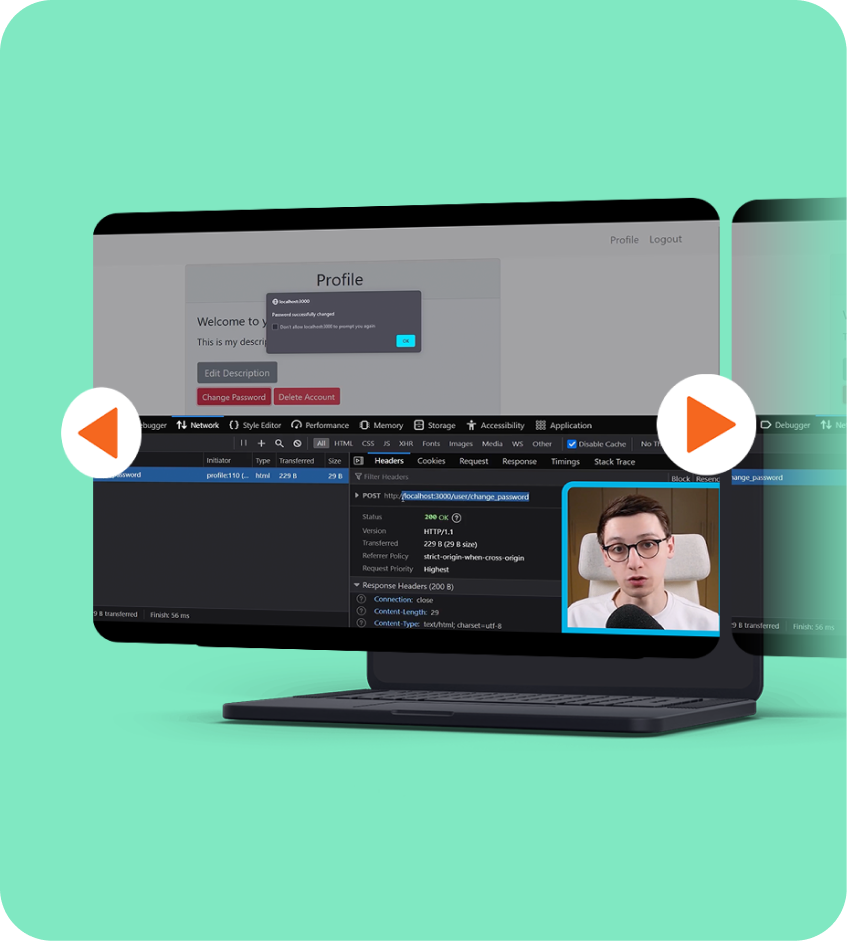
Wizer's curriculum goes beyond reviewing AI-generated code. Developers learn to use AI safely, secure agent access, and apply AI to security itself. Topics include:
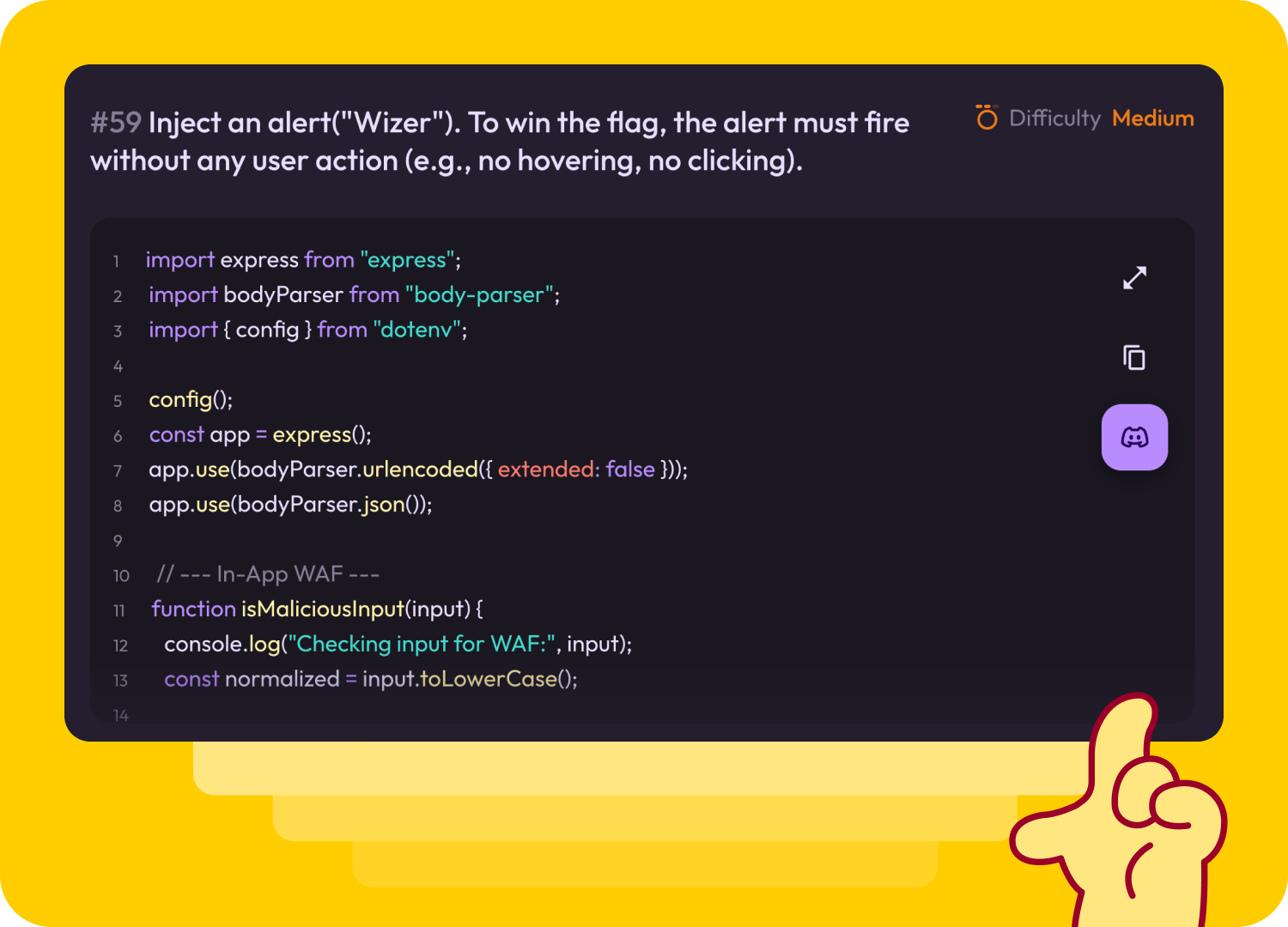
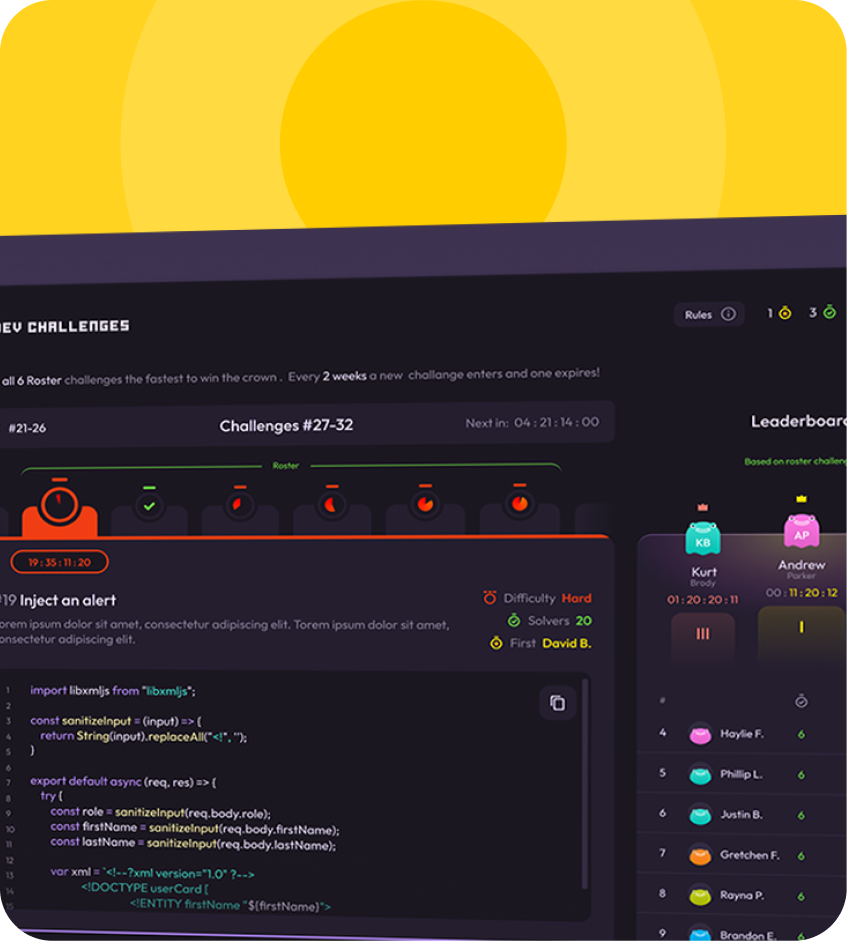
Reading about a risk and catching it in live code are different skills. Wizer's Capture the Flag challenges put developers in front of real source code with real vulnerabilities to find and exploit, including the AI-era risks covered in this curriculum, not just the classic OWASP list.
It's the fastest way to see whether the training actually stuck.
Explore our public CTF challenges and experience the excitement firsthand.
Wizer also runs a free, 2-hour coding tournament where developers identify and exploit vulnerabilities head-to-head, followed by a debrief session that walks through what worked and why.
Good for teams who want a low-stakes way to see the training in action before committing to a full rollout.
AI can generate code, find vulnerabilities, and block known risks. But your team still needs to understand what the AI can access, what an attacker can influence, what should be trusted, and what must be verified.
Don't train developers for how software used to be built.
Prepare them for how it's being built now.
Secure code training teaches developers to write, review, and ship code without introducing security vulnerabilities. Wizer's version adds a layer most secure coding programs don't cover yet: how to safely use AI coding tools and agents, since those now touch source code, credentials, and internal systems directly.
Both. The curriculum includes core secure development fundamentals (the kind of training most teams already expect) alongside AI-specific topics like prompt injection, securing MCP servers, and locking down what coding agents can access and execute.
Prompt injection is when an attacker embeds malicious instructions in content an AI system processes, manipulating the AI into taking unintended actions. Developers building on or integrating AI tools need to recognize this risk because it can affect what a coding agent does with the access it's been given.
Both. Developers get structured curriculum plus hands-on Capture the Flag challenges against live source code and a free coding tournament, so they're applying judgment against real vulnerabilities, not just watching a video.
Traditional secure code training assumes a human wrote every line. Wizer's AI-era curriculum assumes a coding agent may have written, reviewed, or executed part of it — and trains developers for the judgment calls that creates: when to trust AI output, how to secure agent access to credentials and tools, and what changes when agents enter CI/CD.