What is an AI phishing attack? An AI phishing is a phishing attack that uses generative AI to create more convincing emails, messages, voice calls, video calls, or fake websites. To train employees for AI phishing, focus less on spotting typos and more on verifying requests, checking channels, reporting suspicious messages, and practicing realistic simulations.
If your security training metrics only measure how many people clicked a basic simulation link this month, you're getting a false sense of security.
To protect your organization, you need a quick shift from visual detection to strict, process-driven habits.
Why Traditional Phishing Tests Fall Short
Standard simulations test employees under perfect, vacuum-like conditions. Multiple-choice quizzes are easy to pass when a worker knows they are being tested.
In reality, AI attacks strike when your team is busy and distracted. Large Language Models (LLMs) allow scammers to scale highly personalized risks instantly:
- Flawless Brand Mimicry: AI tools analyze your website and public posts to perfectly mirror your corporate tone and internal jargon.
- Leaked Thread Injection: Scammers use AI to analyze stolen email threads from external vendors, seamlessly dropping malicious requests into existing, trusted conversations.
Because AI removes the classic visual "red flags," you can't just teach employees what a phishing email looks like anymore. You have to teach them how to spot suspicious behavior.
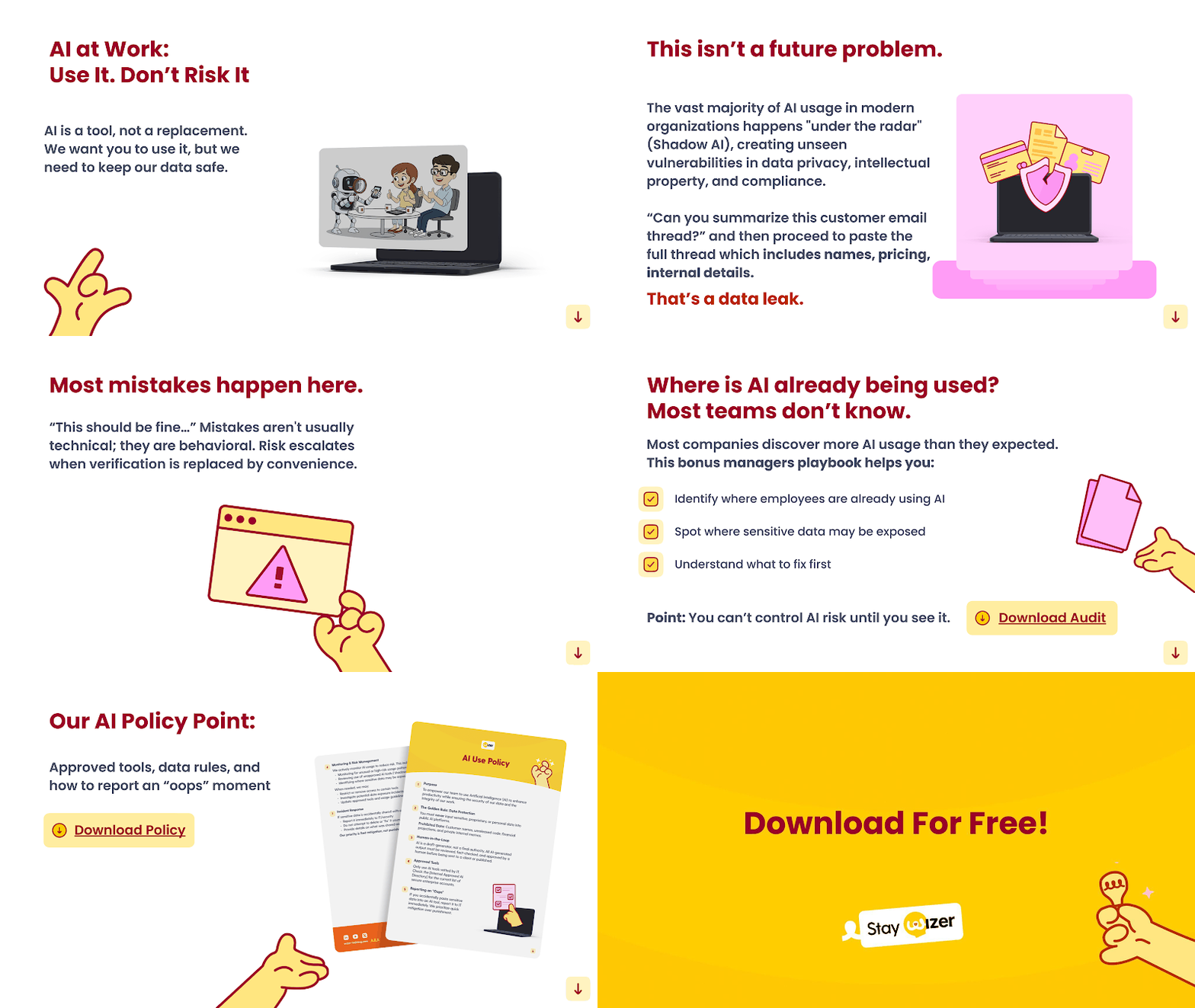
FREE AI Policy Template Kit + PowerPoint Preview
The Operational Blueprint: Process Over Clues
Since visual clues are dead, your best defense against AI phishing is building automatic, process-driven habits.
- The "Out-of-Band" Habit: Train your team to automatically verify any high-stakes request using a completely separate communication channel. If a request comes via email, verify it via a trusted phone number or internal chat. This is especially critical as scammers turn to audio scams, check out our Detect Deepfakes & Voice Cloning Course to teach your team how to handle synthetic audio requests.
- Set Clear Guardrails for Daily Tech: Employees love using new tools to speed up their workflow, but they need to know the boundaries. Use the Use Gen AI Safely Training to teach them exactly what sensitive data should never be fed into a public prompt, and the GENAI: Ethics, Risks & Best Practices Module to establish secure everyday habits.
- Watch Out for Digital Lurkers: AI isn't just generating text; it's hiding in your meetings. Use our Remote Work & AI Notetakers Course to show your team how easy it is for an unauthorized AI bot to leak sensitive call data during virtual meetings.
Elevate Your AI Defense
Training your team for the AI era doesn't have to be boring, long, or overly technical. By focusing on behavioral habits, you transform your workforce into your strongest security asset.
Check out our AI Security Course Library to launch bite-sized, engaging training modules that keep your organization one step ahead of automated threats.
.png)